What Is Resveratrol & Why Is It Studied?
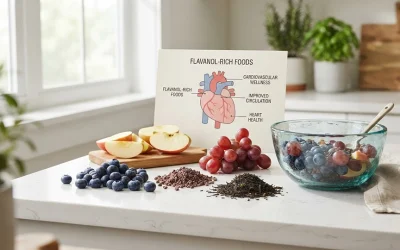
Resveratrol is a naturally occurring polyphenol found in foods including:
⚬ Grapes & Red Wine
⚬ Berries such as Blueberries, Raspberries & Cranberries
⚬ Peanuts & Cocoa-containing foods
Resveratrol has been widely investigated in research involving oxidative stress, inflammatory signaling, metabolism and cellular pathways associated with aging. Findings differ substantially between laboratory studies, animal models and human clinical research.
Resveratrol in Aging-Related Cellular Research
Resveratrol is studied in several biological pathways relevant to aging research, including:
⚬ Oxidative-stress and cellular-redox pathways
⚬ Gene-regulatory and nutrient-sensing pathways associated with aging biology
⚬ Mitochondrial and energy-metabolism research
These mechanistic findings help explain scientific interest in resveratrol, but they do not establish that supplementation slows or reverses human aging.

Resveratrol, SIRT1 & Cellular Pathways
(1) Oxidative-Stress Research
⚬ Resveratrol is a polyphenol studied for antioxidant and redox-related activity
⚬ Research examines its effects on cellular responses to oxidative stress
⚬ These mechanisms are not equivalent to demonstrating prevention of aging-related cellular damage in humans
(2) SIRT1 & Nutrient-Sensing Pathways
⚬ Resveratrol has been investigated in relation to SIRT1 and other nutrient-sensing pathways
⚬ SIRT1 participates in processes involving metabolism, DNA repair, mitochondrial biology and cellular stress responses
⚬ The contribution of SIRT1 modulation to human longevity remains unresolved, and mechanistic findings do not demonstrate lifespan extension
(3) Inflammatory & Cardiovascular Research
⚬ Human studies have investigated resveratrol in inflammatory, endothelial and cardiovascular-related outcomes
⚬ Results vary by dose, study population, health status and outcome measured
⚬ This research does not establish that resveratrol prevents cardiovascular disease or age-related disease
What Human Resveratrol Research Shows
Clinical research has examined resveratrol across metabolic, cardiovascular, inflammatory, cognitive and other health-related outcomes. Results are mixed and often depend on the population, dose and duration studied.
Recent evidence reviews report benefits for some specific outcomes in certain populations, while many other findings remain inconsistent or supported by lower-certainty evidence. These clinical findings do not establish that resveratrol extends human lifespan or broadly prevents age-related disease.
Review a recent umbrella review of randomized-trial evidence.
Resveratrol in AgeReverse Resurge
AgeReverse Resurge includes resveratrol among ingredients selected in the context of research into oxidative stress, metabolism, mitochondrial biology and aging-related cellular pathways.
The presence of resveratrol in a multi-ingredient formulation does not establish that the finished product activates SIRT1, repairs DNA, reduces chronic inflammation, slows aging or extends longevity.
Explore the broader research context for ingredients in Resurge.
Resveratrol & Healthy-Aging Research
Resveratrol is a naturally occurring polyphenol studied in relation to SIRT1, AMPK, mitochondrial biology, oxidative stress and inflammatory signaling. These pathways are relevant to aging research, which has generated substantial scientific interest in the compound.
Much of the evidence linking resveratrol to lifespan or broad anti-aging effects comes from mechanistic studies and experimental models. Human clinical research has reported effects on some metabolic and cardiovascular markers in particular populations, but findings are heterogeneous and do not establish that resveratrol extends human lifespan or slows biological aging.
AgeReverse™ includes resveratrol in the context of this ongoing research. Ingredient-level mechanistic evidence should be distinguished from demonstrated clinical effects of the finished formulation.
Continue Exploring Resveratrol Research
Continue exploring how resveratrol is studied in cellular and healthy-aging biology, including its relationship with oxidative stress, metabolism, mitochondrial pathways and nutrient sensing. Current evidence does not establish that AgeReverse Resurge slows aging or preserves youthful cellular function.
Explore the Science of Healthy Aging
Continue exploring the latest research into the biological mechanisms associated with aging, longevity and cellular health.
Related research: Review the broader health research on Resveratrol, learn how Resveratrol interacts with healthy-aging pathways, and explore NMN and mitochondrial dysfunction.